
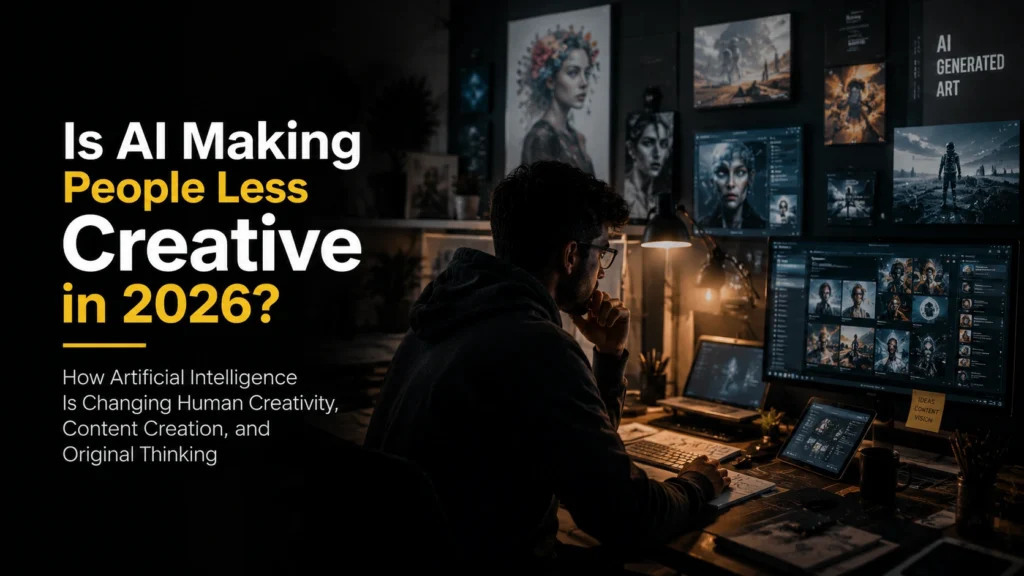
AI Creativity in 2026: The Shocking Truth About Human Creativity
How Artificial Intelligence Is Changing Human Creativity, Content Creation, and Original Thinking
Introduction
AI creativity is becoming one of the biggest discussions in the creator economy in 2026. Writers, influencers, designers, and marketers are now using artificial intelligence for brainstorming, editing, research, and ai content creation faster than ever before. While some creators believe smart AI tools improve productivity and idea generation, others worry that depending too much on automation may slowly reduce original thinking and human imagination.
The conversation is no longer about whether AI can create content. The real question is whether people will continue developing their own creative voice while using these systems daily.
A few years ago, creating content required hours of brainstorming, rewriting, designing, editing, and experimenting. Today, creators can generate scripts, captions, thumbnails, images, and blog outlines within minutes. That speed is useful, but it also raises concerns about originality and creative thinking.
Some creators now publish more content than ever before. Others feel their ideas are becoming repetitive because many AI generated outputs follow similar patterns. This balance between convenience and originality is shaping the future of creativity with AI in ways many people did not expect.
Table of Contents
- What AI Creativity Really Means?
- Why Creators Are Using Smart AI Tools?
- How AI Creativity Is Changing Creative Work?
- Is AI Reducing Original Thinking?
- Assisted Creativity vs Lazy Creativity
- Real Examples of AI Content Creation in 2026
- Common Mistakes Creators Make With AI
- Best Practices for Using AI Without Losing Creativity
- The Future of Creativity With AI
- Frequently Asked Questions
- Conclusion
What AI Creativity Really Means?
AI creativity does not mean machines suddenly became emotional artists or original thinkers. Most AI systems analyze massive amounts of existing content and identify patterns in language, visuals, sound, and design. Then they generate responses based on those learned patterns.
That is why AI can create content quickly, but human creativity still feels different.
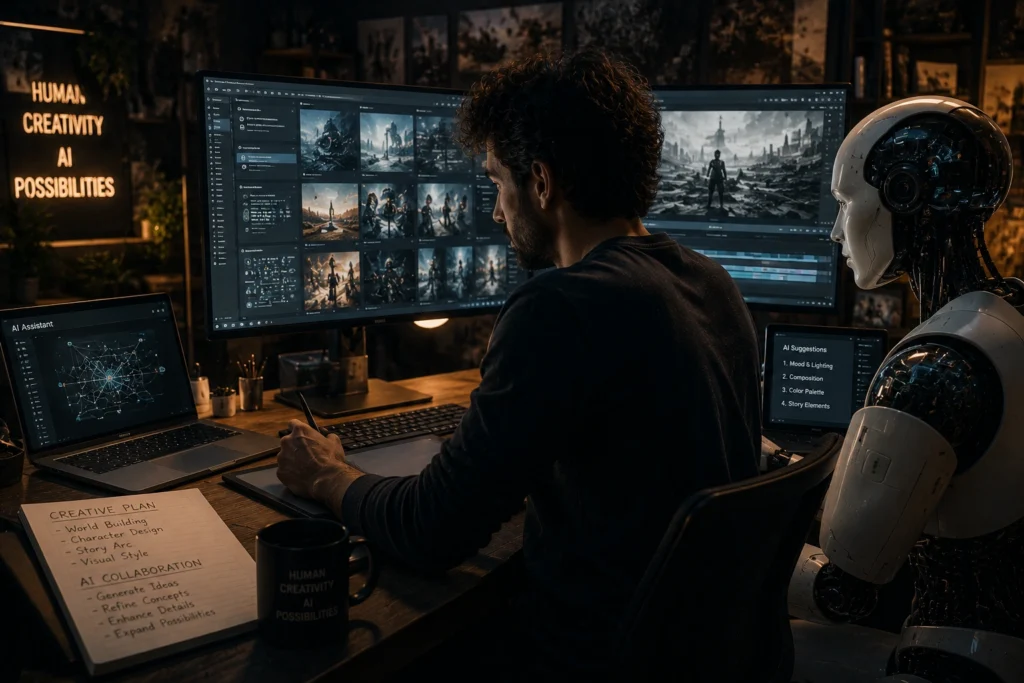
Human ideas are influenced by:
- Personal experiences
- Emotions
- Culture
- Observation
- Storytelling
- Failure and growth
For example, an AI system can generate a motivational quote in seconds. However, it cannot genuinely understand heartbreak, ambition, rejection, nostalgia, or personal struggle the way humans do.
This is why many experienced creators treat AI as a creative assistant instead of a replacement.
Why Creators Are Using Smart AI Tools?
Faster Content Production
Content creation has become extremely demanding. Creators now manage YouTube videos, Instagram posts, blogs, newsletters, podcasts, and short form content at the same time.
Smart AI tools help save time by assisting with:
- Writing captions
- Brainstorming content ideas
- Generating outlines
- Editing grammar
- Repurposing content
- Organizing research
A solo creator who once needed an entire day to prepare weekly content can now complete the process within hours.
That efficiency matters, especially for influencers and freelancers working without large teams.
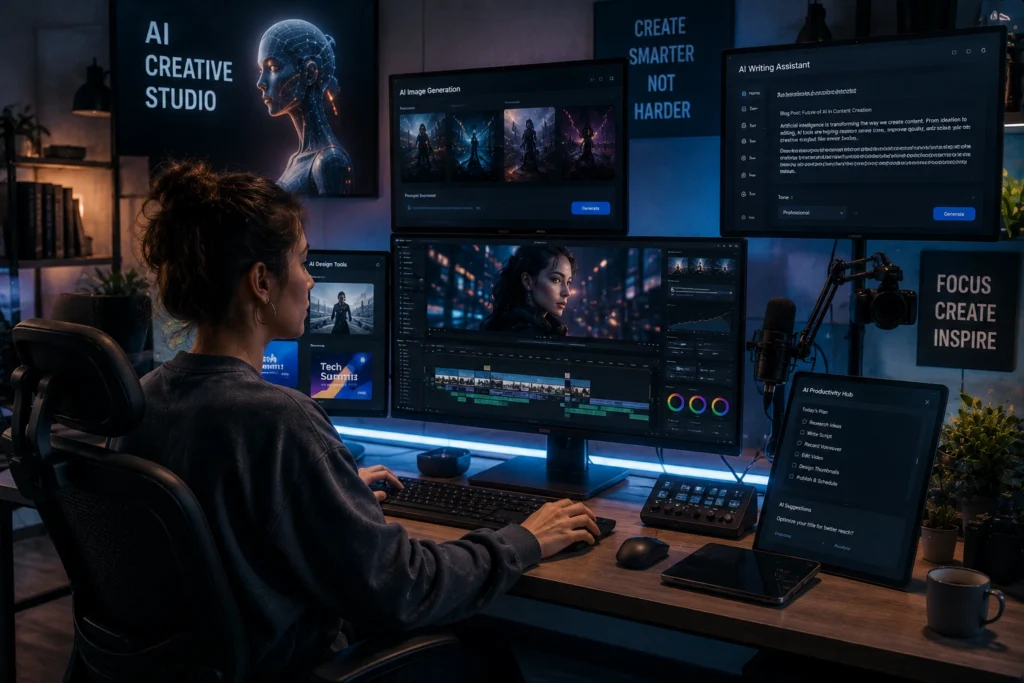
Lower Creative Burnout
Creative burnout is becoming increasingly common.
Many creators feel pressure to stay active online every day, constantly chasing trends and engagement. AI tools reduce some of that mental exhaustion by helping with repetitive tasks.
Instead of staring at a blank screen for hours, writers can begin with AI assisted drafts and improve them manually.
This often helps creators stay consistent without feeling overwhelmed.a
How AI Creativity Is Changing Creative Work?
AI Helps Beginners Learn Faster
One major advantage of ai content creation tools is accessibility.
People who once struggled with writing, editing, designing, or organizing ideas now have systems that help them start more confidently.
For example:
- A student can create better presentations
- A beginner blogger can organize ideas faster
- A small business owner can create social media content
- A new YouTuber can structure scripts more clearly
Years ago, many people avoided creative work because the learning process felt difficult. AI reduced some of those barriers.
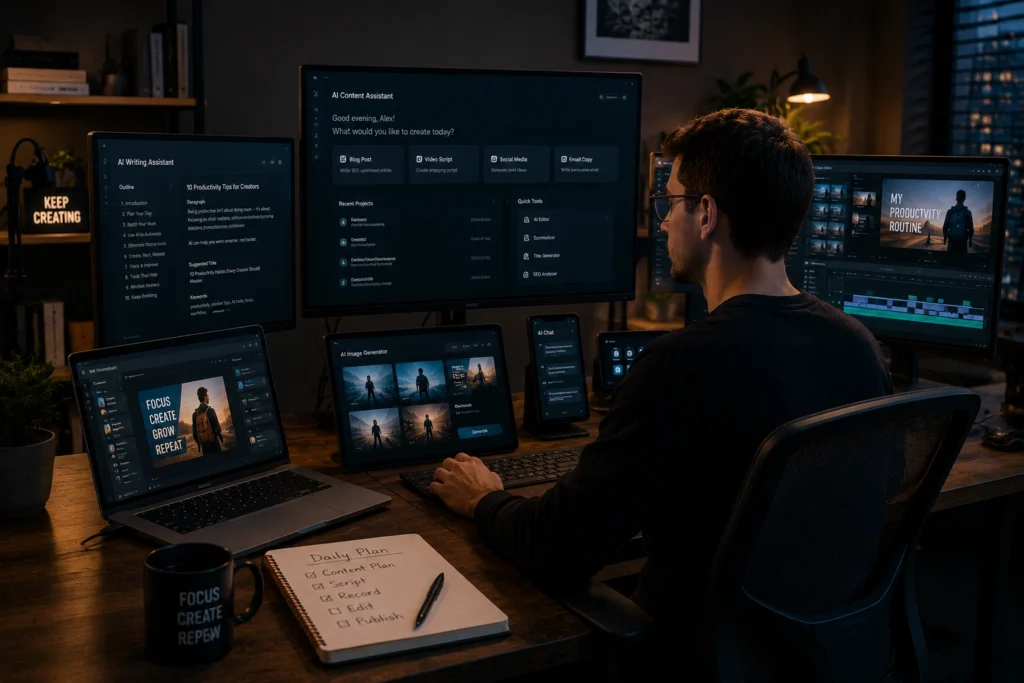
AI Encourages Faster Experimentation
Some creators are becoming more experimental because of AI.
A designer can test multiple concepts within one hour instead of spending days creating rough drafts manually. A video creator can generate several title ideas quickly before choosing the strongest one.
This allows creators to explore more possibilities in less time.
However, the quality still depends on human decision making.
Is AI Reducing Original Thinking?
The Risk of Creative Dependency
The biggest concern surrounding ai and human creativity is dependency.
Many creators now rely on AI for:
- Video hooks
- Captions
- Scripts
- Thumbnail ideas
- Blog structures
- Content calendars
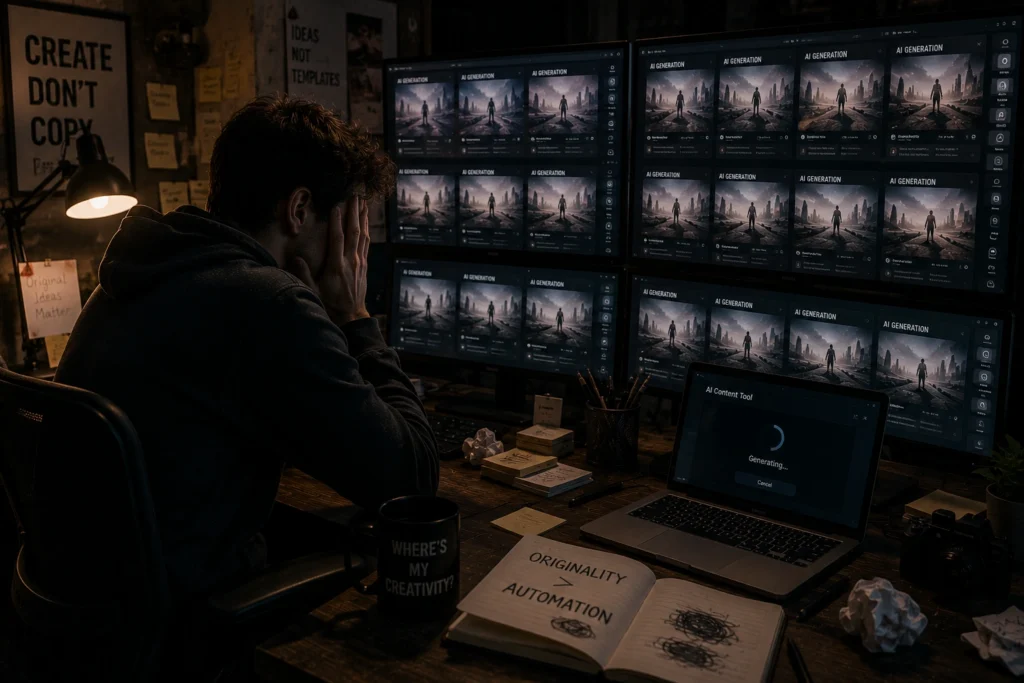
Over time, depending too heavily on automation may weaken independent thinking.
A common example appears across social media. Many captions, thumbnails, and video styles now feel identical because creators use similar prompts and templates.
The result is efficient content that often lacks personality.
Convenience Can Replace Deep Thinking
Real creativity usually requires time.
Some of the best ideas appear after reflection, observation, experimentation, mistakes, or long conversations. AI often encourages instant answers instead.
When creators constantly search for fast outputs, they may spend less time developing original perspectives.
This does not mean AI destroys creativity. It simply means convenience can sometimes reduce deeper creative effort if used carelessly.
Assisted Creativity vs Lazy Creativity
Assisted Creativity
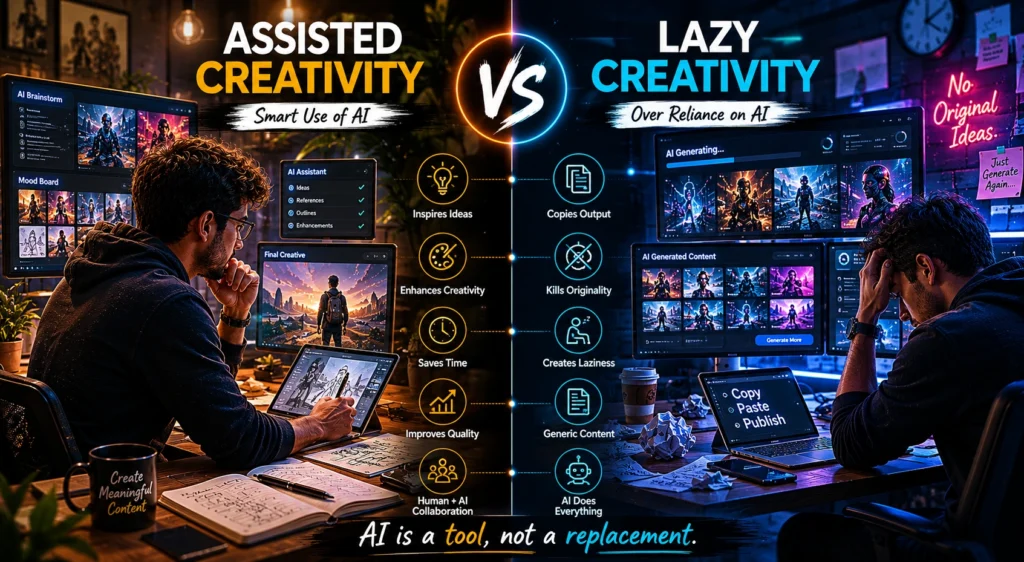
Assisted creativity happens when AI supports human ideas.
Example:
A creator shares personal stories and real experiences while using AI to improve structure, grammar, and organization.
The human remains the source of originality.
Lazy Creativity
Lazy creativity happens when creators publish AI outputs without personal insight or editing.
Example:
Someone generates motivational posts daily using automated prompts and posts them directly without improving or personalizing the content.
Eventually audiences notice the lack of authenticity.
The strongest creators in 2026 are usually combining human personality with AI efficiency.
Real Examples of AI Content Creation in 2026
Influencers Using AI for Planning
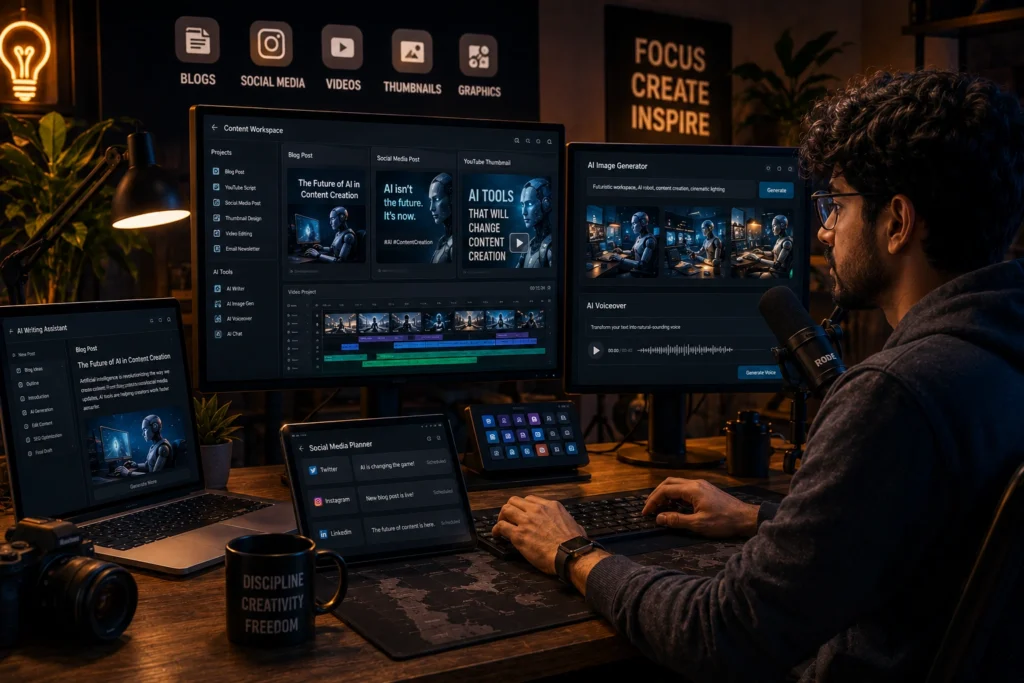
Many influencers use AI for:
- Audience analysis
- Content scheduling
- Caption generation
- Repurposing long videos into short clips
- Trend research
This helps improve consistency while reducing workload.
Writers Using AI for Research
Writers increasingly use AI to summarize articles, organize outlines, and speed up topic research.
However, experienced writers still fact check information carefully and add personal insights manually.
Readers can often tell when content feels overly automated.
Designers Using AI for Inspiration
Graphic designers often use AI generated visuals as rough concepts instead of final products.
One freelance designer explained that AI reduced the time spent creating first drafts, but final client work still required emotional understanding, branding decisions, and human creativity.
That balance is becoming more common across creative industries.
Common Mistakes Creators Make With AI
Publishing AI Outputs Without Editing
One of the biggest mistakes is treating AI generated content as finished work.
Unedited AI writing often feels repetitive and emotionally flat.
Strong creators usually rewrite heavily and add personal experiences.
Chasing Quantity Instead of Quality
Some creators focus only on publishing massive amounts of automated content.
This may increase short term visibility, but audiences eventually lose interest if the content lacks originality.
Ignoring Human Experiences
People connect with emotions, stories, opinions, failures, lessons, and personality.
AI cannot replace lived experiences.
Creators who ignore this often struggle to build long term audience trust.
Best Practices for Using AI Without Losing Creativity
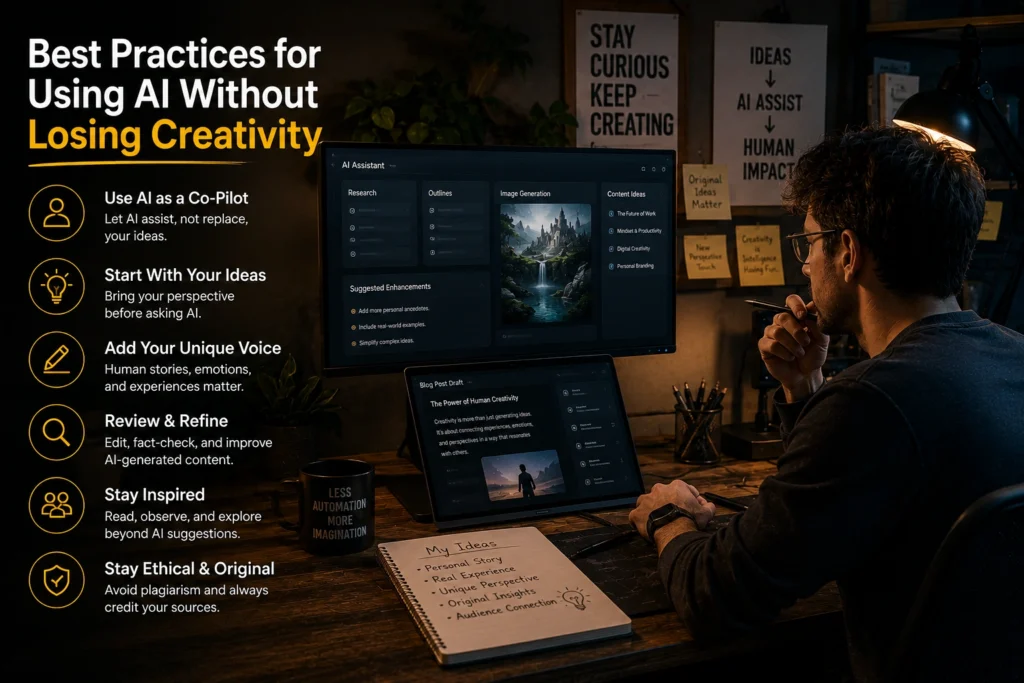
Use AI as Support
AI should support creativity instead of replacing it.
Use it for:
- Organizing ideas
- Improving productivity
- Editing drafts
- Research assistance
- Brainstorming concepts
But keep your personal voice visible
Protect Creative Thinking Time
Not every problem needs an instant AI solution.
Some of the best ideas appear while:
- Walking
- Reading
- Observing people
- Journaling
- Reflecting quietly
Protecting those moments matters more than many creators realize.
Add Personal Perspective
Whenever creating content, ask:
- What real experience can I share?
- What opinion makes this unique?
- What insight can only come from me?
That is often where memorable content begins.
The Future of Creativity With AI
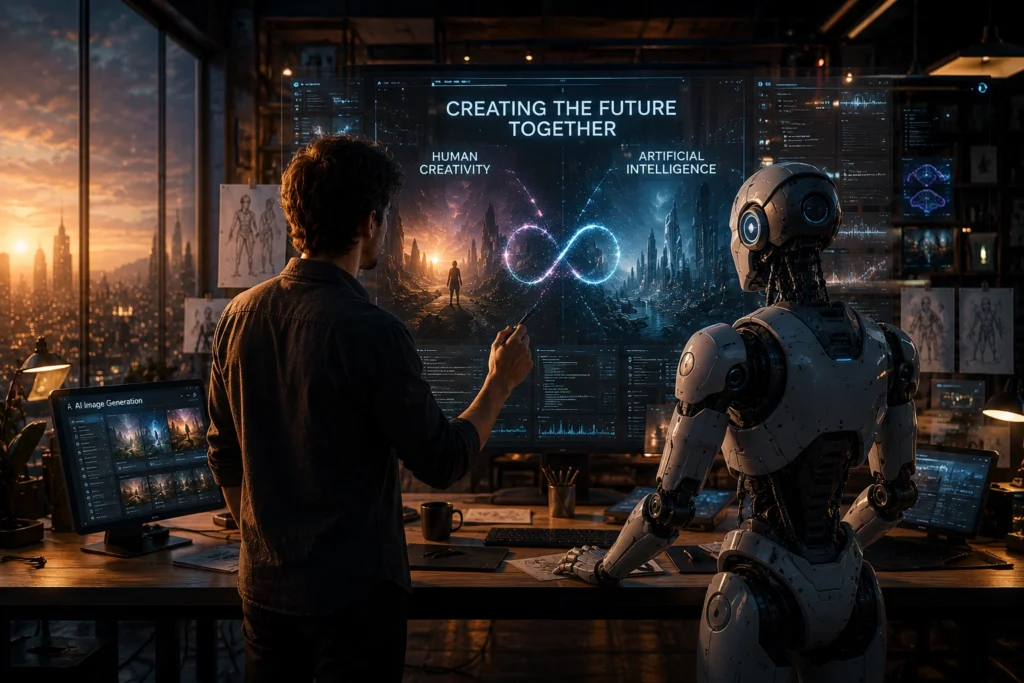
The future of creativity with AI will likely become more collaborative rather than competitive.
AI systems will continue handling repetitive tasks quickly, while humans focus more on originality, emotional connection, storytelling, humor, and personal branding.
Interestingly, audiences may begin valuing authentic human voices even more because automated content is becoming common everywhere online.
People rarely remember content simply because it was efficient. They remember content that made them feel understood.
That emotional connection still belongs to humans.
Frequently Asked Questions
What is AI creativity?
AI creativity refers to artificial intelligence generating content such as writing, images, music, videos, or ideas using learned data patterns.
Is AI making people less creative?
AI can reduce independent thinking if creators rely on it too heavily. However, it can also improve creativity when used as a support tool instead of a replacement.
How are creators using smart AI tools in 2026?
Creators use smart AI tools for writing assistance, editing, research, content planning, design ideas, automation, and workflow management.
Can AI replace human creativity?
AI can assist creative work, but human emotions, storytelling, experiences, and personal perspectives remain difficult to replace.
What is the future of creativity with AI?
The future of creativity with AI will likely involve humans and AI working together, with people focusing more on originality and emotional connection.
Conclusion
AI creativity is transforming the way creators work in 2026. From faster workflows to easier ai content creation, artificial intelligence is helping people produce more content in less time. However, creativity has never been only about speed. Real creativity still comes from emotion, experience, curiosity, and personal perspective.
The future of creativity with AI will depend on balance. Creators who use AI as a support system instead of a replacement for thinking will likely produce the most meaningful work. Technology can assist ideas, but human imagination is still what makes content memorable.
If you enjoy exploring topics about AI, creativity, content creation, and the future of digital work, visit AI With Sahil for more practical AI guides, creator resources, and tutorials.