
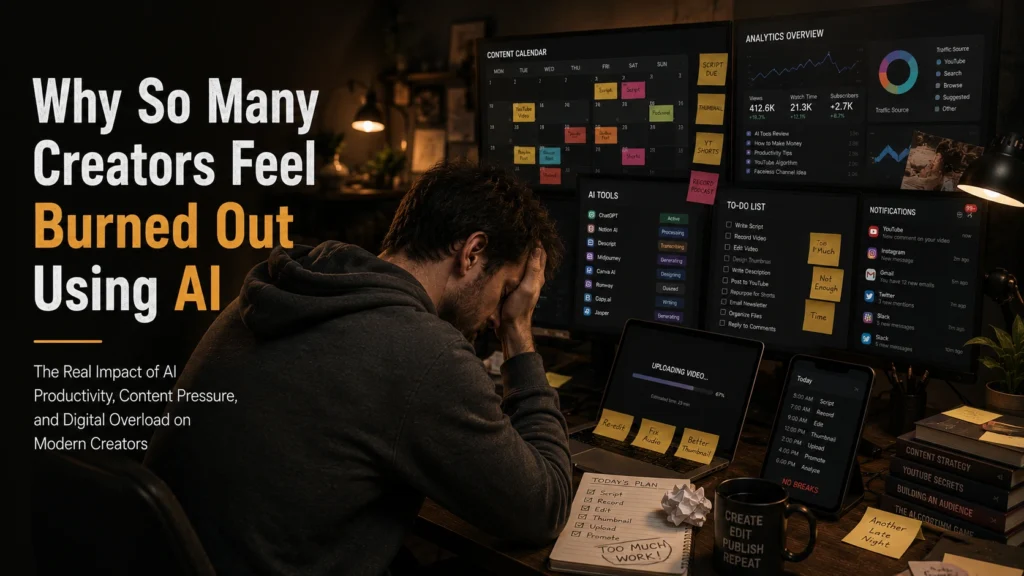
Why So Many Creators Feel Burned Out Using AI?
The Real Impact of AI Productivity, Content Pressure, and Digital Overload on Modern Creators
Introduction
A lot of creators expected AI tools to make life easier. In many ways, they did. Editing became faster. Content ideas became endless. Research that once took hours could suddenly happen in minutes.
Yet something strange happened at the same time.
Many creators started feeling mentally exhausted even while becoming more productive. That growing sense of ai burnout is becoming more common among YouTubers, writers, freelancers, students, designers, and influencers who spend most of their day creating online.
The pressure to post constantly, respond faster, learn every new tool, and stay relevant never really stops anymore. Instead of reducing stress completely, AI productivity tools sometimes increase creative pressure in ways people did not expect.
This article explores why creator burnout is rising in the AI era, how digital overload affects creativity, and what creators can do to protect their focus and mental energy without falling behind.
Table of Contents
- What Is AI Burnout?
- Why Creators Feel More Pressure Than Ever?
- How AI Workflow Tools Changed Content Creation?
- The Hidden Mental Cost of Constant Productivity
- Creative Burnout With AI and the Loss of Original Thinking
- Common Mistakes Creators Make With AI Productivity Tools
- Healthy Ways to Use AI Without Burning Out
- FAQ Section
- Conclusion
What Is AI Burnout?
AI burnout refers to mental exhaustion caused by constant interaction with AI systems, productivity tools, content automation, and nonstop digital workflows.
It does not usually happen overnight.
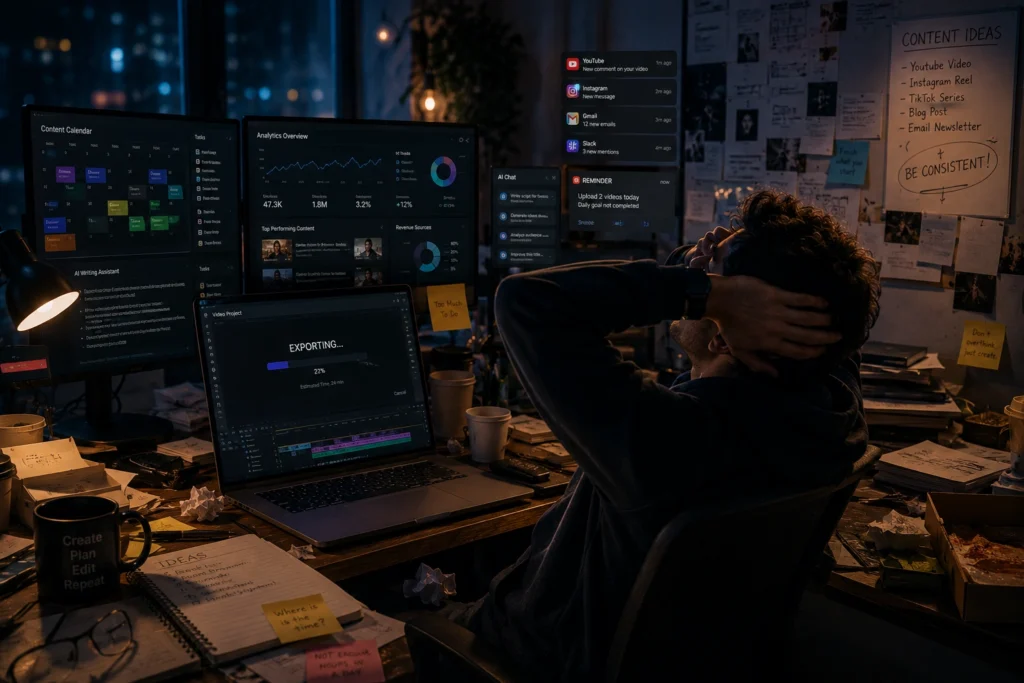
Most creators experience it slowly. At first, AI feels exciting. Work becomes faster and easier. Then expectations rise. Suddenly creators are expected to produce more content, reply quicker, edit faster, and stay active on multiple platforms every day.
The problem is not always the technology itself. Often, it is the pressure that comes with it.
A freelance creator who once posted two videos per week may now feel pressure to post daily because AI speeds up editing and scripting. A student using AI for assignments may feel mentally overloaded trying to optimize every task.
Eventually the brain stops feeling creative and starts feeling constantly “on.”
Why Creators Feel More Pressure Than Ever?
Faster Content Cycles Changed Audience Expectations
Before AI tools became mainstream, creating high quality content usually took time. Audiences understood that.
Now people see creators publishing videos, blogs, reels, thumbnails, newsletters, and social posts at incredible speed. As a result, many followers unconsciously expect nonstop output.
Creators begin comparing themselves to impossible standards.
One YouTuber may see another creator posting five short videos daily and think, “I should be doing more too.” In reality, that creator might have a full team behind the scenes.
AI increased speed, but it also increased comparison culture.
Every Platform Rewards Consistency
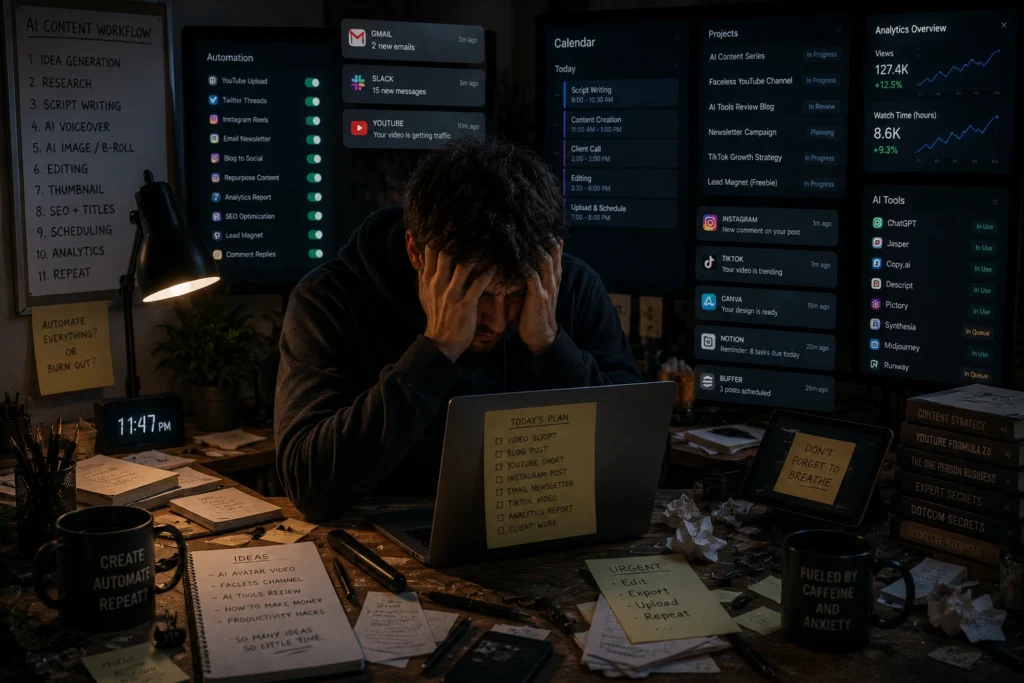
Most social platforms reward creators who upload frequently.
That creates a dangerous cycle:
- More content leads to more visibility
- More visibility creates more pressure
- More pressure increases exhaustion
Many creators stop resting because they fear losing momentum.
Some even feel guilty taking one day off.
Over time, that mindset leads directly into creator burnout.
How AI Workflow Tools Changed Content Creation?
AI Removed Friction But Added Noise
AI workflow tools simplified many tasks:
- Script writing
- Video editing
- Caption generation
- Research
- Email writing
- Thumbnail ideas
However, creators now consume more information than ever.
Instead of quietly thinking through ideas, many people constantly jump between:
- AI chat tools
- Analytics dashboards
- Editing apps
- Content planners
- Social media notifications
The brain rarely gets silence anymore.
One creator described it perfectly during a podcast interview:
“I stopped feeling creative and started feeling processed.”
That sentence explains modern digital overload better than most productivity advice online.
Productivity Became an Identity
Another hidden issue is emotional attachment to productivity.
Some creators now judge their self worth based on:
- Number of uploads
- Engagement growth
- Daily output
- Workflow efficiency
AI productivity tools can accidentally intensify this mindset because they constantly encourage optimization.
When every task can become faster, creators begin feeling like they should always do more.
That expectation becomes mentally exhausting.
The Hidden Mental Cost of Constant Productivity
Creativity Needs Mental Recovery
One of the biggest misconceptions online is that productivity and creativity are the same thing.
They are not.
Productivity is output.
Creativity is mental clarity, emotional awareness, observation, curiosity, and original thinking.
Those things need recovery time.
Many creators lose creative energy because they never disconnect long enough for ideas to develop naturally.
A writer may spend all day generating AI prompts, editing captions, checking analytics, and researching trends. By evening, their brain feels full but creatively empty.
That is a common sign of ai burnout.
Constant Optimization Creates Anxiety
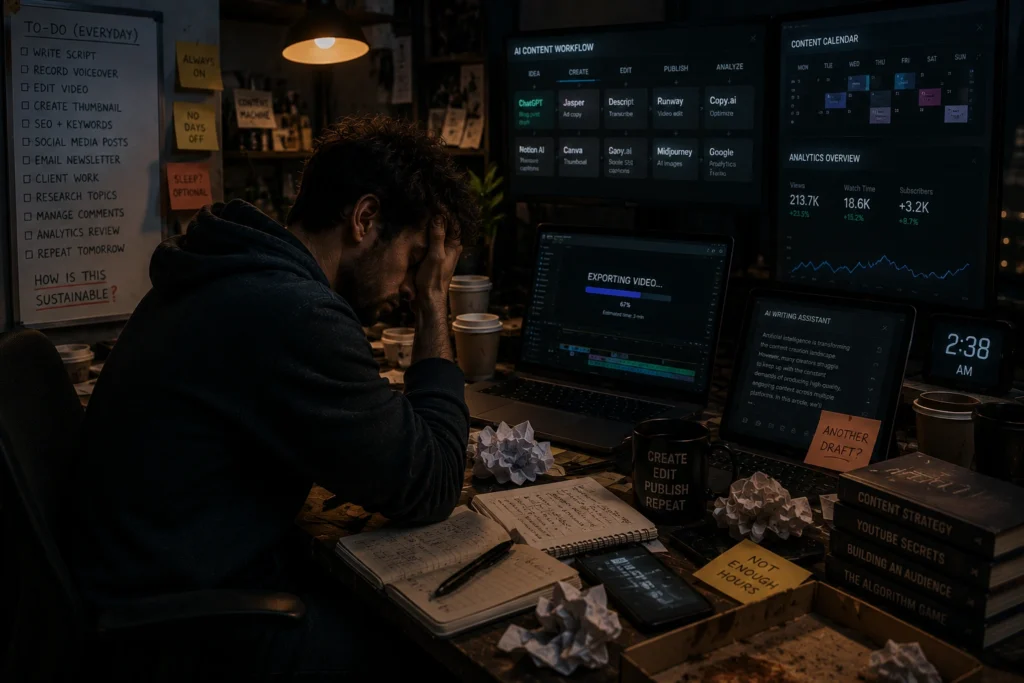
Many creators now optimize everything:
- Posting time
- Thumbnail colors
- Hook styles
- Retention graphs
- SEO keywords
- AI prompts
Optimization itself is not harmful. The problem starts when creators feel unable to relax unless every detail performs perfectly.
This creates low level anxiety that stays active all day.
Over time, even simple creative work begins feeling emotionally heavy.
Creative Burnout With AI and the Loss of Original Thinking
Some Creators Stop Trusting Their Own Ideas
One unexpected effect of creative burnout with ai is reduced confidence in personal creativity.
Some creators now rely so heavily on AI generated suggestions that they stop trusting their own instincts.
Instead of asking:
“What do I genuinely want to create?”
They ask:
“What will perform best?”
That shift changes creative identity completely.
The result is often content that feels efficient but emotionally flat.
Audiences can sense that difference.
Too Much Input Reduces Creative Depth
Many creators consume nonstop trend content while also using AI generated inspiration.
Eventually everything starts sounding similar.
The most memorable creators usually spend time developing personal perspective instead of chasing every trend immediately.
That requires slower thinking sometimes.
Ironically, slowing down can improve creativity more than speeding everything up.
Common Mistakes Creators Make With AI Productivity Tools
Using Too Many Tools at Once
A major mistake is trying every new AI platform weekly.
Too many tools create mental clutter.
Most creators work better with a small focused system.
Treating AI Like a Replacement for Creativity
AI can support ideas, but it cannot replace human experiences, emotions, humor, storytelling, or personality.
The creators who stand out usually combine AI efficiency with authentic personal thinking.
Ignoring Mental Fatigue
Many people notice physical exhaustion but ignore mental overload.
Signs of burnout often include:
- Difficulty focusing
- Feeling emotionally disconnected from work
- Constant tiredness
- Lack of creative excitement
- Increased procrastination
Ignoring these signs usually makes burnout worse over time.
Healthy Ways to Use AI Without Burning Out
Create Before You Consume
Try developing your own thoughts before opening AI tools or social media feeds.
This helps protect originality.
Even writing rough ideas manually for ten minutes can improve creative confidence.
Use AI for Repetitive Tasks Only
The healthiest approach is often using AI for support tasks:
- Organizing notes
- Summarizing research
- Cleaning grammar
- Scheduling workflows
Meanwhile, personal storytelling and creative direction should still come from you.
Schedule Offline Thinking Time
Some of the best ideas happen away from screens.
Walking, journaling, reading quietly, or simply taking breaks helps the brain recover from digital overload.
Creators often underestimate how valuable boredom can be for creativity.
Productivity is important, but using too many tools can create unnecessary complexity. Many professionals benefit more from a focused set of AI productivity tools rather than constantly adding new apps.
Frequently Asked Questions
What is ai burnout?
AI burnout is mental exhaustion caused by constant use of AI systems, productivity tools, digital workflows, and nonstop online pressure.
Why do creators feel burned out using AI tools?
Many creators feel overwhelmed by content pressure, comparison culture, nonstop optimization, and the expectation to produce faster content constantly.
Can AI productivity tools reduce creativity?
They can if creators rely too heavily on automation and stop developing their own ideas or creative perspective.
What are signs of creator burnout?
Common signs include low motivation, mental exhaustion, lack of creativity, difficulty focusing, and emotional detachment from work.
How can creators avoid creative burnout with ai?
Creators can reduce burnout by simplifying workflows, limiting tool overload, taking offline breaks, and using AI mainly for repetitive tasks.
Conclusion
AI tools are not inherently harmful. In many cases, they genuinely help creators save time and work more efficiently.
The real challenge is learning how to use them without turning creativity into nonstop pressure.
Many people experiencing ai burnout are not lazy or unmotivated. They are mentally overloaded from constant stimulation, comparison, optimization, and digital noise.
The creators who stay consistent long term are usually not the ones working every second. They are the ones who protect their focus, energy, and originality carefully.
Technology can support creativity. It should not consume it.
If you enjoy thoughtful discussions about AI, creator workflows, productivity, and digital trends, explore more articles and practical guides on AI With Sahil.