
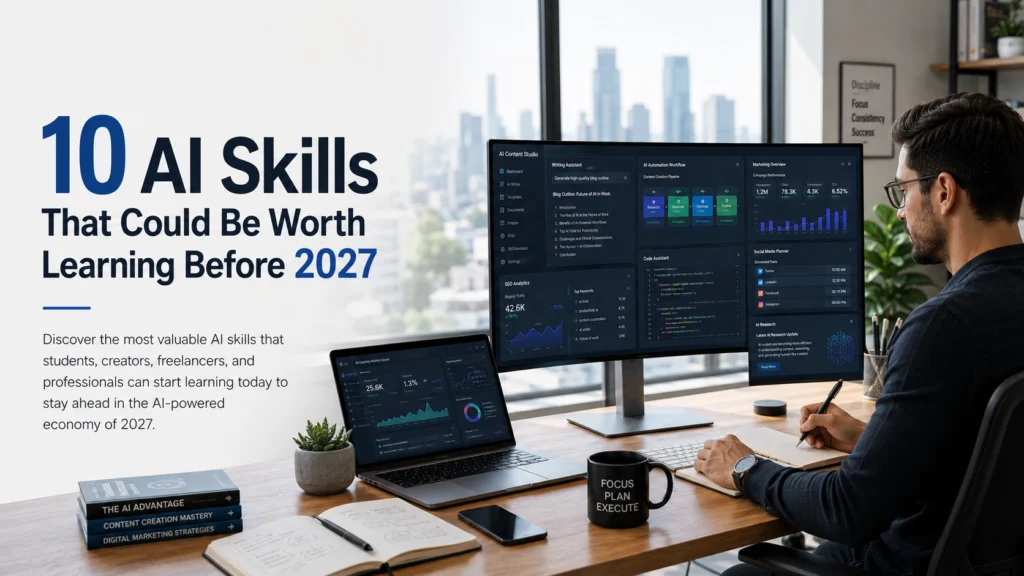
10 AI Skills That Could Be Worth Learning Before 2027
Discover the most valuable AI skills that students, creators, freelancers, and professionals can start learning today to stay ahead in the AI powered economy of 2027.
Introduction
A few years ago, knowing how to use artificial intelligence was considered a niche skill. Today, it is quickly becoming a practical advantage in education, business, freelancing, research, and everyday work. The people who learn useful AI skills now may have more opportunities, greater productivity, and stronger career flexibility over the next several years.
When discussing the best AI skills to learn, many people immediately think about coding or machine learning. While those skills are valuable, they are only part of the picture. Some of the most useful AI skills involve communication, problem solving, automation, content creation, and data analysis.
Whether you are a student planning your future, a freelancer looking for new services to offer, or a professional wanting to stay competitive, this guide explores ten AI skills that could be worth learning before 2027.
Why AI Skills Matter More Than Ever?
Artificial intelligence is no longer limited to large technology companies. Small businesses, universities, content creators, researchers, and freelancers now use AI tools every day.
The workplace is also changing. Employers increasingly value people who can work alongside AI systems efficiently. In many cases, the ability to use AI productively can save hours each week and improve the quality of work.
The good news is that most AI skills for beginners do not require advanced technical backgrounds. Many can be learned through practice and real projects.

10 Best AI Skills to Learn Before 2027
1. AI Prompt Engineering
Prompt engineering is the ability to communicate effectively with AI systems to get useful results.
Many beginners assume AI tools automatically produce great answers. In reality, the quality of output often depends on the quality of instructions.
Practical Example
A marketer who writes detailed prompts can generate better campaign ideas than someone who provides vague instructions.
Why It Matters
Prompt engineering improves productivity across writing, research, coding, business planning, and content creation.

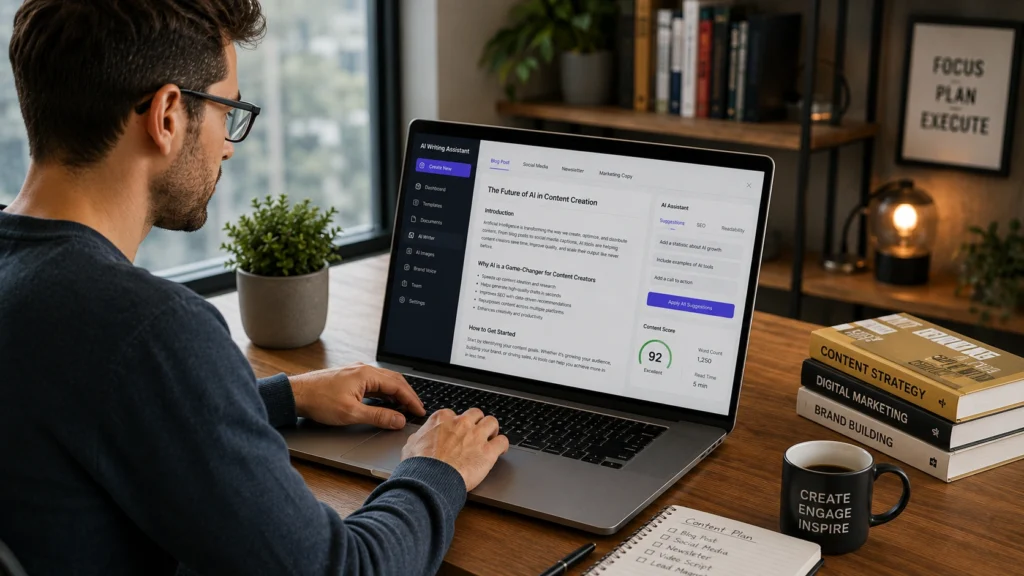
2. AI Content Creation
Content creation remains one of the fastest growing areas for AI adoption.
This includes:
- Blog writing
- Social media content
- Email marketing
- Content planning
- Content repurposing
Mini Case Study
A freelance writer who learns AI assisted content creation can complete research and outlining much faster while still adding personal expertise and editing.
Key Takeaway
AI should support creativity, not replace it.
3. AI Research and Information Analysis
Research skills are becoming more valuable as information continues to grow online.
Modern AI tools can:
- Summarize reports
- Compare sources
- Organize findings
- Extract insights
Researchers, students, and professionals can save significant time while maintaining accuracy through careful fact checking.

4. AI Workflow Automation
Automation is one of the most practical AI skills for future jobs.
Instead of manually repeating tasks, users can build workflows that automate:
- Data collection
- Email management
- Content publishing
- Reporting
- Customer support
Industry Insight
Many businesses are now hiring people who understand automation tools because efficiency directly affects profitability.

5. AI Assisted Coding
Not everyone needs to become a software engineer, but understanding AI assisted coding can be extremely useful.
AI coding assistants help with:
- Writing code
- Debugging
- Learning programming
- Building projects faster
Even non technical professionals can benefit from basic coding knowledge combined with AI support.

6. AI Data Analysis
Businesses make decisions based on data.
AI tools now help users:
- Analyze spreadsheets
- Identify trends
- Create reports
- Visualize information
Real World Example
A sales manager can use AI to identify customer behavior patterns that would otherwise take hours to discover manually.
Data literacy is likely to remain one of the most valuable AI skills to learn in 2027 and beyond.

7. AI Image Generation
Visual content continues to play a major role in marketing, education, and communication.
AI image generation skills can help with:
- Blog graphics
- Advertising creatives
- Social media visuals
- Product mockups
- Presentations
The most successful creators combine strong visual judgment with AI generation tools.

8. AI Video Production
Video consumption continues to grow across platforms.
AI now assists with:
- Script writing
- Editing
- Subtitles
- Voiceovers
- Short form content creation
Mini Case Study
A small YouTube creator can produce content more consistently using AI editing and workflow tools, allowing them to focus more on storytelling and audience engagement.

9. AI Marketing and SEO
Marketing is changing quickly because of AI.
Professionals who understand both marketing fundamentals and AI tools often have a significant advantage.
Key areas include:
- Keyword research
- Content optimization
- Audience analysis
- Email campaigns
- Market research
For freelancers, this skill can open opportunities across multiple industries.

10. AI Agent Management
One emerging area involves managing AI agents that can perform multi step tasks autonomously.
These systems may:
- Conduct research
- Organize information
- Generate reports
- Assist with workflows
While still evolving, understanding how to supervise and evaluate AI agents could become an important skill before 2027.
Industry Observation
Many experts believe future workplaces will involve humans coordinating multiple AI systems rather than performing every task manually.

Common Mistakes When Learning AI Skills
Learning Tools Instead of Concepts
Many people focus only on specific software.
Tools change frequently. Fundamental skills such as communication, analysis, creativity, and problem solving remain valuable regardless of platform.
Ignoring Practical Projects
Watching tutorials alone rarely builds expertise.
The fastest learners usually create projects, solve real problems, and experiment regularly.
Trusting AI Without Verification
AI can make mistakes.
Fact checking, critical thinking, and human judgment remain essential skills.
Best Practices for Building AI Skills
Start With One Skill at a Time
Trying to master everything simultaneously often leads to frustration.
Choose one area that aligns with your goals and build confidence before expanding.
Practice Consistently
Thirty minutes daily often produces better results than several hours once per month.
Small improvements compound over time.
Build Real Projects
Students can create study systems.
Freelancers can automate client workflows.
Creators can improve content production processes.
Practical experience builds confidence faster than theory alone.
Stay Curious
The AI industry evolves quickly.
People who continue learning and adapting are more likely to benefit from future opportunities.
Frequently Asked Questions
What are the best AI skills to learn before 2027?
Some of the most valuable AI skills include prompt engineering, workflow automation, AI research, AI content creation, data analysis, AI marketing, and AI agent management.
Are AI skills useful for beginners?
Yes. Many AI skills for beginners require no technical background and can be learned through practical projects and online resources.
Which AI skills are best for future jobs?
AI automation, data analysis, prompt engineering, AI marketing, and AI assisted coding are among the most promising AI skills for future jobs.
Can students learn AI skills without coding?
Absolutely. Many useful AI skills such as research, content creation, prompt writing, and productivity workflows do not require coding knowledge.
How long does it take to learn AI skills?
The timeline varies, but many people can develop practical beginner level skills within a few weeks of consistent learning and application.
Conclusion
The conversation around artificial intelligence often focuses on technology itself. However, the real opportunity lies in learning how to work effectively with these tools.
The best AI skills to learn before 2027 are not necessarily the most complex. They are the skills that help people solve problems, improve productivity, communicate ideas, analyze information, and adapt to changing work environments.
Students, freelancers, creators, researchers, and professionals all have opportunities to benefit from AI. The key is to start early, practice consistently, and focus on real world applications rather than chasing every new trend.
The people who succeed with AI over the next few years will likely be those who combine technology with human judgment, creativity, and critical thinking.

Interested in learning more about AI tools, productivity strategies, automation workflows, and future ready digital skills?
Explore more practical AI guides and resources on AI With Sahil to continue building skills that can help you stay prepared for the opportunities ahead.