
Best AI Tools for Content Creation in 2026?
Discover how the best AI tools for content creation are transforming blogging, YouTube, Instagram, design, video editing, and digital creativity for modern creators in 2026.
Introduction
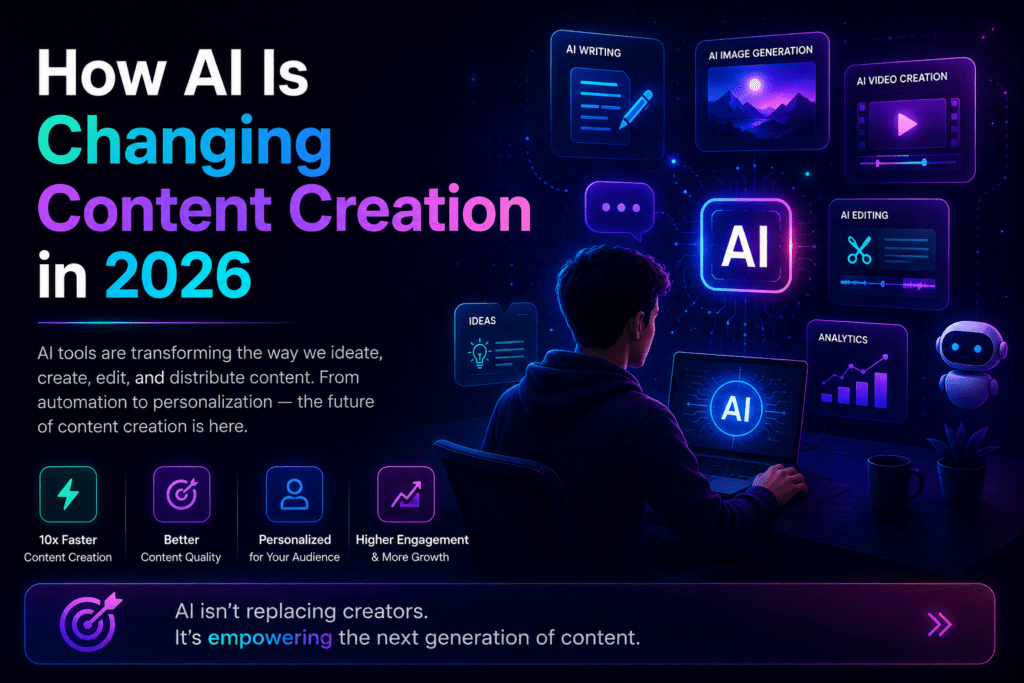
Content creation looks very different in 2026 compared to just a few years ago. What once required large teams, expensive software, and long production timelines can now be done much faster with the help of AI tools.
Writers use AI for research and idea generation. Video creators use AI for editing and captions. Designers generate graphics within seconds. Even beginners with little technical experience are building professional content using artificial intelligence.
However, AI is not replacing creativity. Instead, it is changing how creators work, plan, edit, and publish content. The biggest shift is productivity. Tasks that used to take hours can now be completed in minutes, allowing creators to focus more on strategy and storytelling.
This article explores how AI is transforming content creation in 2026, including real-world examples, practical use cases, benefits, limitations, and what creators should expect moving forward.
Table of Contents
- What AI Means for Content Creation?
- What Are the Best AI Tools for Content Creation in 2026?
- The Rise of AI Writing Tools
- AI in Video Editing and Short Form Content
- How AI Is Changing Graphic Design?
- AI Voiceovers and Audio Content
- AI and SEO Content Optimization
- How Small Creators Are Competing Faster?
- Common Problems With AI-Generated Content
- Best Practices for Using AI Responsibly
- The Future of AI Content Creation
- FAQs
- Conclusion
What AI Means for Content Creation?
Artificial intelligence in content creation refers to software systems that help generate, edit, analyze, or improve digital content.
This includes:
- Writing articles
- Editing video
- Generating thumbnails
- Creating voiceovers
- Producing social media caption
- Optimizing SEO
- Designing graphics
- Automating repetitive tasks
Instead of replacing creators completely, AI tools are helping people work more efficiently.
For example, a YouTube creator who once spent five hours editing videos can now use AI tools to generate subtitles, remove silence, improve audio quality, and create clips automatically.
What Are the Best AI Tools for Content Creation in 2026?
Content creation is evolving rapidly, and the best AI tools for content creation in 2026 are helping creators produce blogs, videos, graphics, social media posts, and marketing content faster than ever before. From AI writing assistants to image generators and video editing platforms, artificial intelligence is becoming an essential part of modern creative workflows.
We tested several AI platforms based on productivity, ease of use, content quality, workflow efficiency, and creator experience. Some of the best AI tools for content creation include AI chatbots for writing, image generation software for thumbnails and graphics, and AI productivity apps that help automate repetitive tasks.
For bloggers and marketers, AI writing tools can generate article ideas, captions, SEO outlines, and social media content in seconds. Video creators are also using AI-powered editing tools to improve reels, shorts, and YouTube videos more efficiently. These AI tools for content creation help creators save time while maintaining creativity and consistency across platforms.
Another reason why the best AI tools for content creation are becoming popular is their accessibility for beginners. Many free AI tools now offer simple interfaces, smart automation features, and powerful creative capabilities for students, freelancers, and businesses.
In our experience, the most effective AI content creation tools are the ones that improve productivity without replacing human creativity. AI can assist with workflows, brainstorming, editing, and automation, but originality, storytelling, and audience connection still come from the creator.
As AI technology continues to improve, the best AI tools for content creation in 2026 will likely become even more advanced, helping creators build smarter digital workflows for blogging, marketing, design, and online growth.
The Rise of AI Writing Tools
AI writing tools have become one of the biggest changes in digital publishing.
Platforms like OpenAI ChatGPT, Anthropic Claude AI, and Google Gemini are now widely used by bloggers, marketers, students, and businesses.
How Writers Use AI in 2026?
Creators use AI for:
• Blog outlines
• Content ideas
• SEO optimization
• Email writing
• Script generation
• Product descriptions
• Social media caption
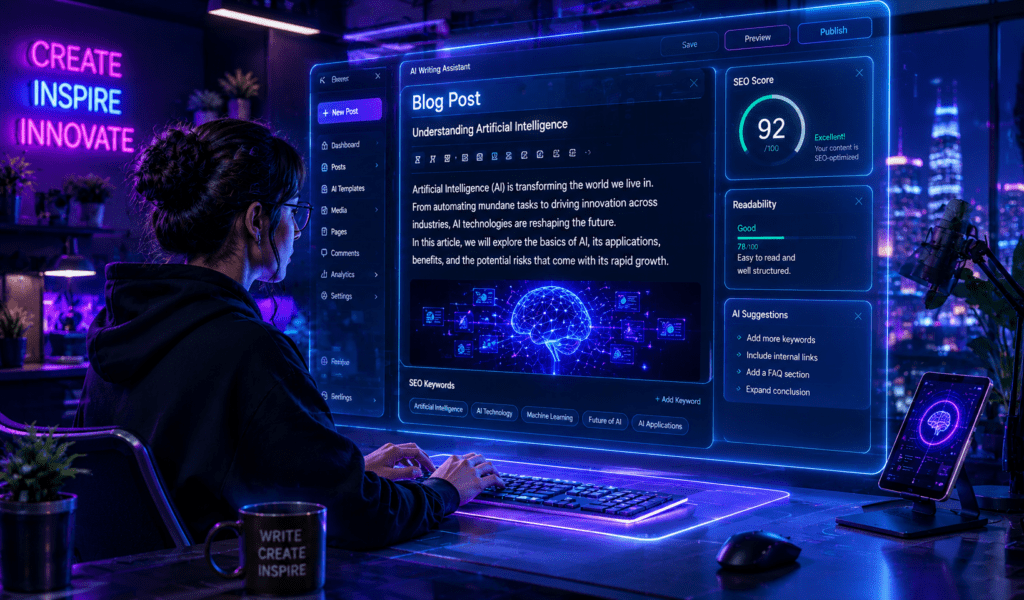
A practical example can be seen in small businesses. Many local brands now use AI tools to create social media content calendars without hiring full marketing teams.
However, experienced creators still edit AI-generated drafts carefully. Human insight, storytelling, and emotional connection remain important for quality content.
AI in Video Editing and Short Form Content
Short-form video platforms have grown rapidly, and AI now plays a major role in video production.
AI Video Editing Features
Modern AI editing tools can:
• Automatically cut clips
• Generate subtitles
• Remove background noise
• Create transitions
• Detect highlight moments
• Translate videos into multiple languages
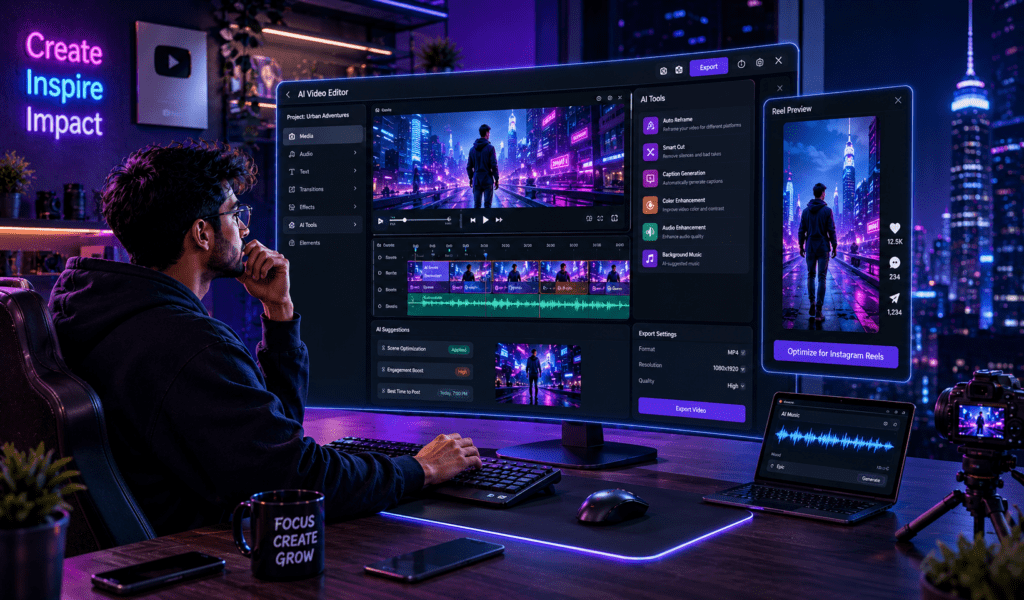
This has helped creators upload content much faster across platforms like YouTube Shorts, Instagram Reels, and TikTok.
A creator who previously uploaded one video weekly can now produce multiple pieces of content daily using AI assisted workflows.
How AI Is Changing Graphic Design?
Graphic design has also become more accessible because of AI image generation tools.
Tools like Adobe Adobe Firefly, Canva Canva AI, and Midjourney allow users to generate visual concepts quickly.
Real World Example
A beginner launching an online store can now create:
• Product banners
• Social media graphics
• Ad creatives
• Website visuals
• Thumbnails
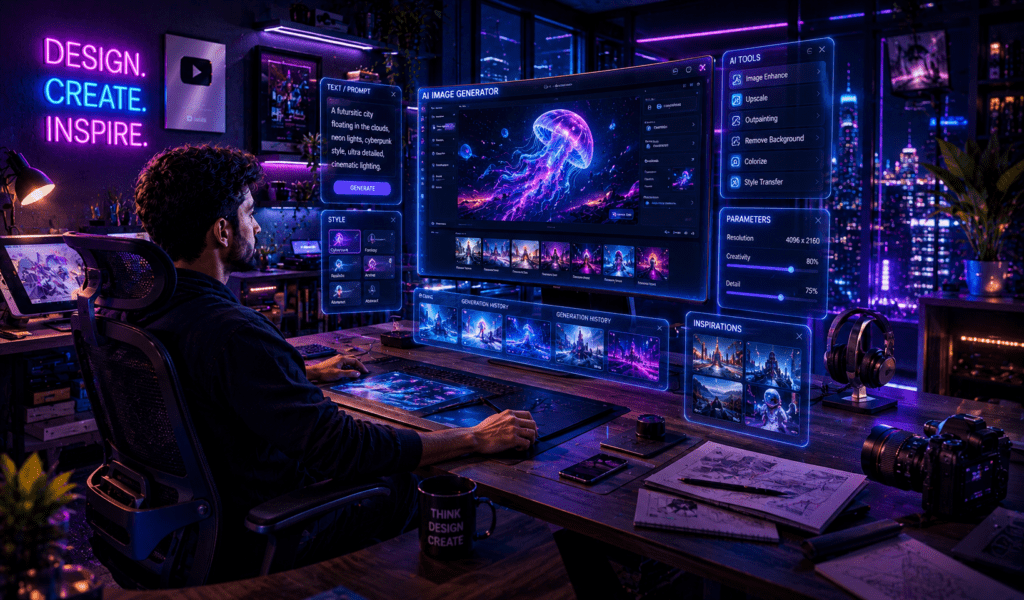
without hiring a professional designer initially.
This does not mean traditional designers are becoming irrelevant. Instead, many designers now use AI to speed up brainstorming and repetitive tasks.
AI Voiceovers and Audio Content
Audio creation has improved significantly in 2026.
AI voice tools now sound more natural than earlier versions and are widely used for:
• YouTube narration
• Podcasts
• Audiobooks
• Explainer videos
• Training materials
Some creators even clone their own voice for faster production workflows.
However, authenticity still matters. Audiences can usually tell when content feels overly automated or emotionally disconnected.
AI and SEO Content Optimization
SEO has become more competitive, and AI tools are helping creators optimize content more effectively.
Modern AI SEO tools assist with:
• Keyword research
• Meta descriptions
• Content structure
• Internal linking
• Search intent analysis
• Readability improvement
This helps websites create content that aligns better with what users are searching for.
Still, Google continues prioritizing helpful and trustworthy content. AI generated articles without originality or expertise often struggle to rank well long term.
How Small Creators Are Competing Faster?
One of the biggest changes in 2026 is that small creators can now compete with larger brands more easily.
Previously, content creation required:
• Expensive software
• Editing teams
• Large budgets
• Technical skills
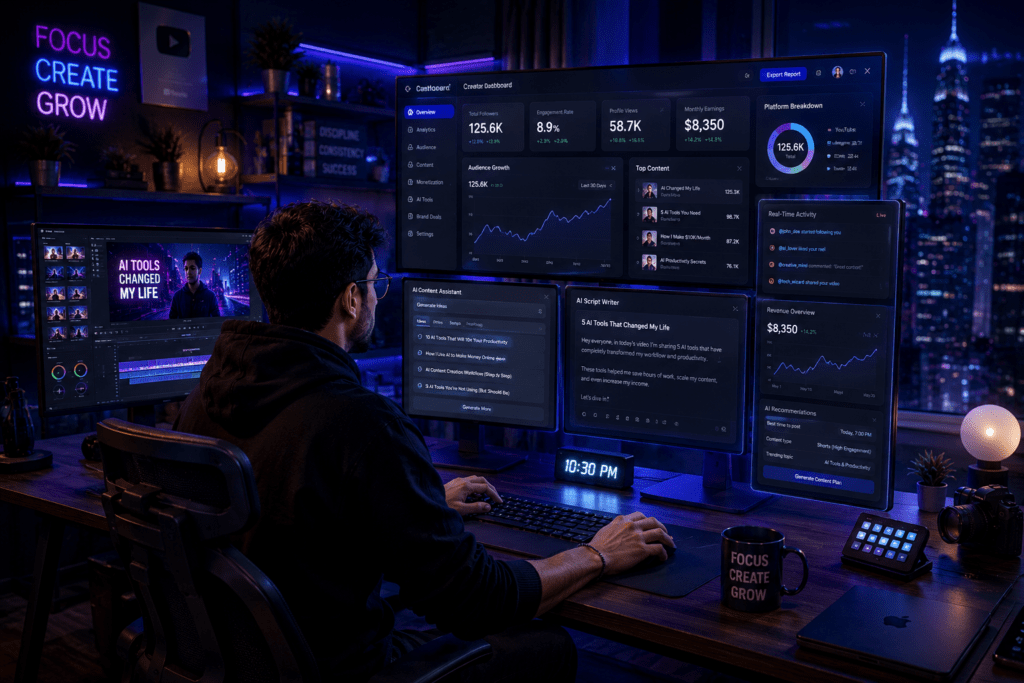
Now a single creator with AI tools can manage:
• Writing
• Editing
• Design
• Publishing
• Analytics
This has created opportunities for students, freelancers, educators, and independent creators.
For example, many solo creators now run successful AI focused blogs, YouTube channels, and social media pages using mostly AI assisted workflows.
Common Problems With AI Generated Content
Despite the advantages, AI-generated content still has limitations.
Generic Writing
Many AI-generated articles sound repetitive because users rely too heavily on automation.
Inaccurate Information
AI tools can occasionally provide outdated or incorrect details.
Lack of Human Personality
Content without personal insight often feels flat and forgettable.
Over Automation
Some creators publish massive amounts of low-quality AI content, hoping for fast traffic growth. This usually performs poorly over time.
Best Practices for Using AI Responsibly
Creators who use AI effectively usually follow a balanced approach.
Use AI as an Assistant
AI should support creativity, not replace critical thinking.
Add Personal Experience
Real opinions, examples, and lessons improve trust and originality.
Fact Check: Important Information
Always verify statistics, technical details, and research claims.
Focus on Audience Value
Helpful content consistently performs better than content made only for search engines
The Future of AI Content Creation
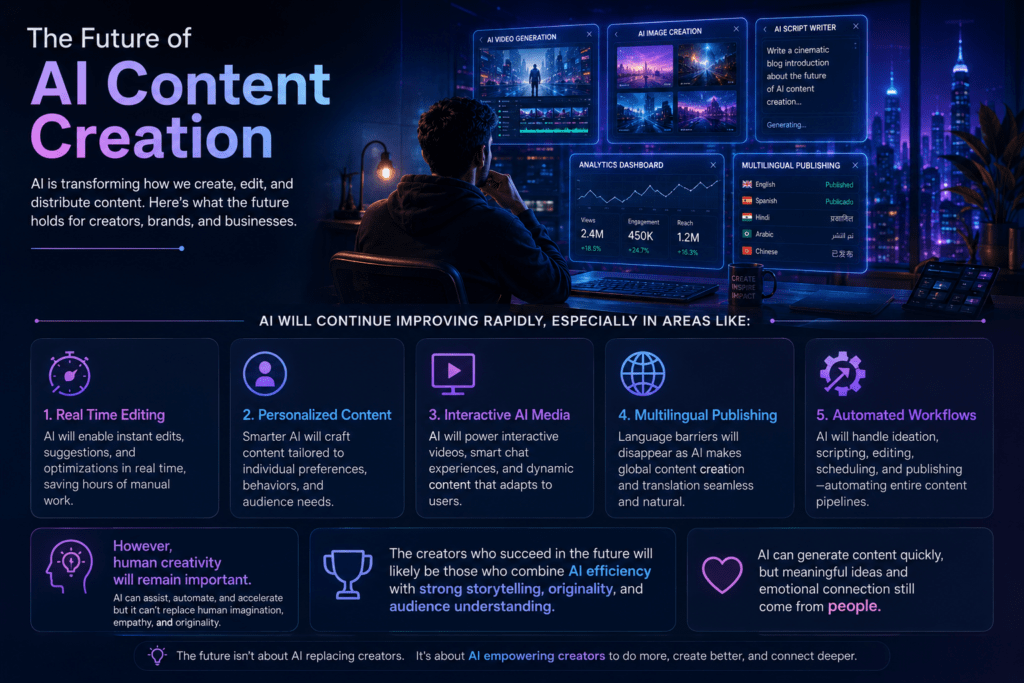
AI will continue improving rapidly, especially in areas like:
• Real-time editing
• Personalized content
• Interactive AI media
• Multilingual publishing
• Automated production workflows
However, human creativity will remain important.
The creators who succeed in the future will likely be those who combine AI efficiency with strong storytelling, originality, and audience understanding.
AI can generate content quickly, but meaningful ideas and emotional connection still come from people.
FAQ Section
How is AI transforming content creation in 2026?
AI is helping creators produce written, visual, and video content faster through automation, editing assistance, and content optimization tools.
Can AI replace content creators?
AI can automate certain tasks, but human creativity, storytelling, and emotional understanding remain essential.
What are the best AI tools for creators in 2026?
Popular tools include ChatGPT, Claude AI, Gemini, Canva AI, Adobe Firefly, and AI video editing platforms.
Is AI-generated content good for SEO?
AI-assisted content can perform well if it provides real value, originality, and accurate information.
Why are creators using AI tools?
Creators use AI to save time, improve productivity, generate ideas, and streamline content workflows.
Conclusion
AI is transforming content creation in ways that were difficult to imagine just a few years ago. From writing and editing to design and automation, creators now have access to tools that dramatically improve productivity.
At the same time, quality still matters more than speed alone. Audiences continue to value authenticity, personality, and useful information.
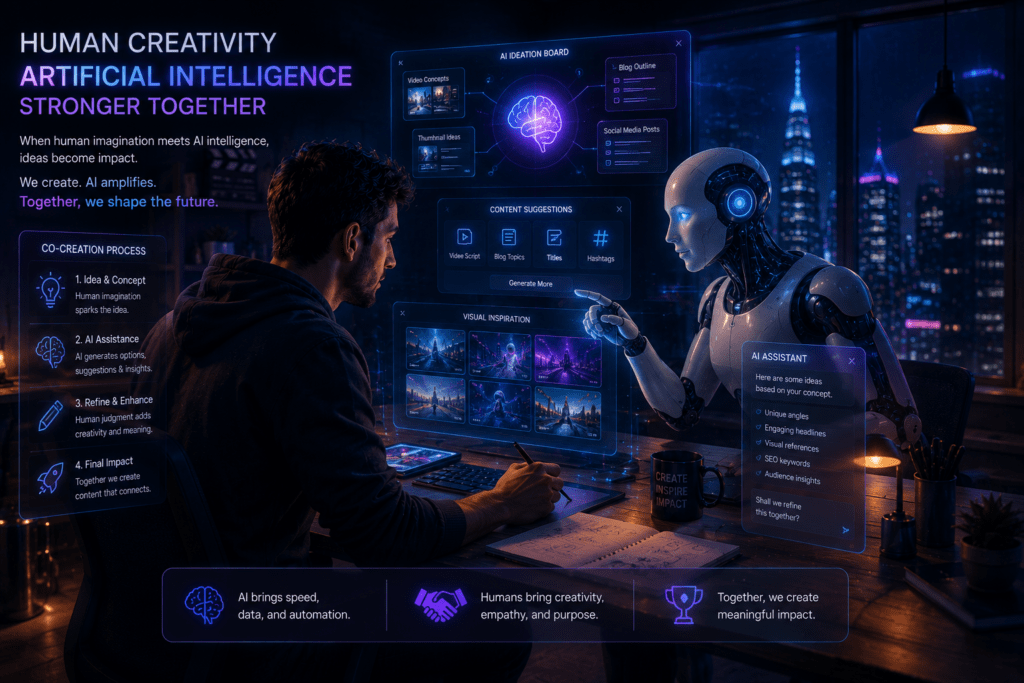
The most successful creators in 2026 are not the ones relying entirely on AI. They are the ones combining technology with human creativity to produce content people genuinely want to consume.
Want to explore more AI tools, blogging guides, and creator resources?
Visit AI With Sahil for tutorials, AI comparisons, and practical content creation guides.