
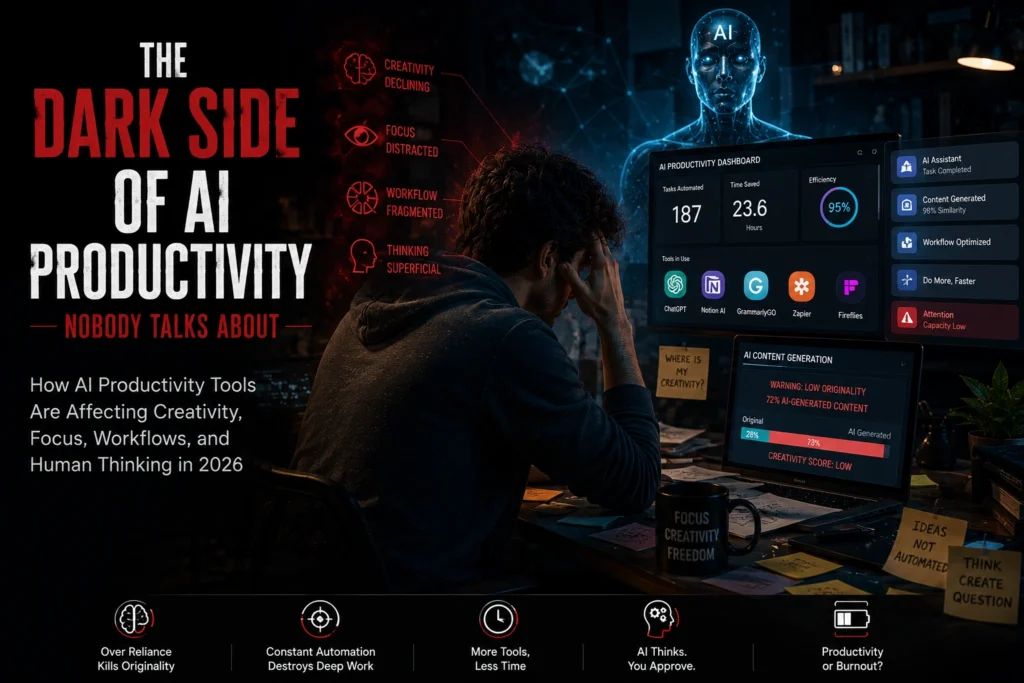
The Hidden Dark Side of AI Productivity in 2026
How AI Productivity Tools Are Affecting Creativity, Focus, Workflows, and Human Thinking in 2026
Introduction
Most people talk about how AI productivity tools save time. Fewer people talk about what happens after months of depending on them every day.
At first, the experience feels exciting. Tasks get completed faster. Research becomes easier. Writing feels smoother. Scheduling becomes automatic. For creators, students, and remote workers, AI productivity looks like the perfect solution to modern digital overload.
Then something strange starts happening.
People begin struggling to focus without assistance. Creative thinking becomes weaker. Simple tasks feel mentally heavier without automation. Some creators even say their work no longer feels personal anymore.
The uncomfortable truth is that AI productivity can improve efficiency while quietly reducing attention span, originality, and deep thinking at the same time. This article explores the hidden side of AI productivity tools in 2026, including how they affect creativity, workflows, focus, and the way humans process information.
Table of Contents
- Why AI Productivity Became So Popular?
- The Hidden Mental Cost of Constant Automation
- How AI Affects Creativity Over Time?
- AI Workflow Tools and Digital Burnout
- When AI Tools That Save Time Start Wasting Time?
- The Rise of Passive Thinking
- Common Mistakes People Make With AI Productivity Tools
- How To Use AI Without Losing Creativity?
- FAQs
- Conclusion
Why AI Productivity Became So Popular?
The rise of AI productivity tools makes complete sense when you look at how people work today.
Most creators and students are overloaded with notifications, deadlines, emails, meetings, and endless digital content. AI tools promise relief from repetitive tasks.
People use AI for:
- Writing captions
- Summarizing notes
- Managing schedules
- Creating outlines
- Organizing projects
- Brainstorming ideas
- Research assistance
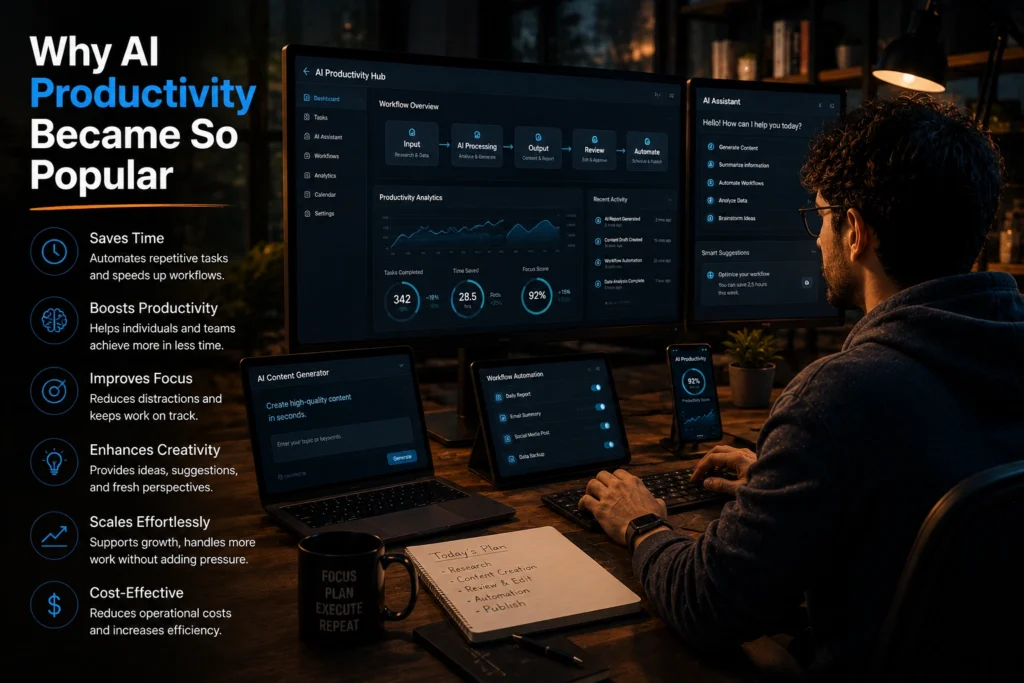
For many users, these tools genuinely help. A student can summarize lecture notes in minutes. A content creator can organize a week of ideas faster than before. A freelancer can automate repetitive client tasks.
The problem starts when convenience slowly becomes dependency.
That shift usually happens quietly.
The Hidden Mental Cost of Constant Automation
Human brains are built through repetition, effort, and problem solving. When too many mental tasks become automated, people often stop practicing important cognitive skills naturally.
This does not happen overnight.
A creator who once brainstormed content ideas manually may eventually struggle to generate original concepts without AI assistance. A student who relies heavily on summaries may stop reading full research material carefully.
Over time, the brain adapts to shortcuts.
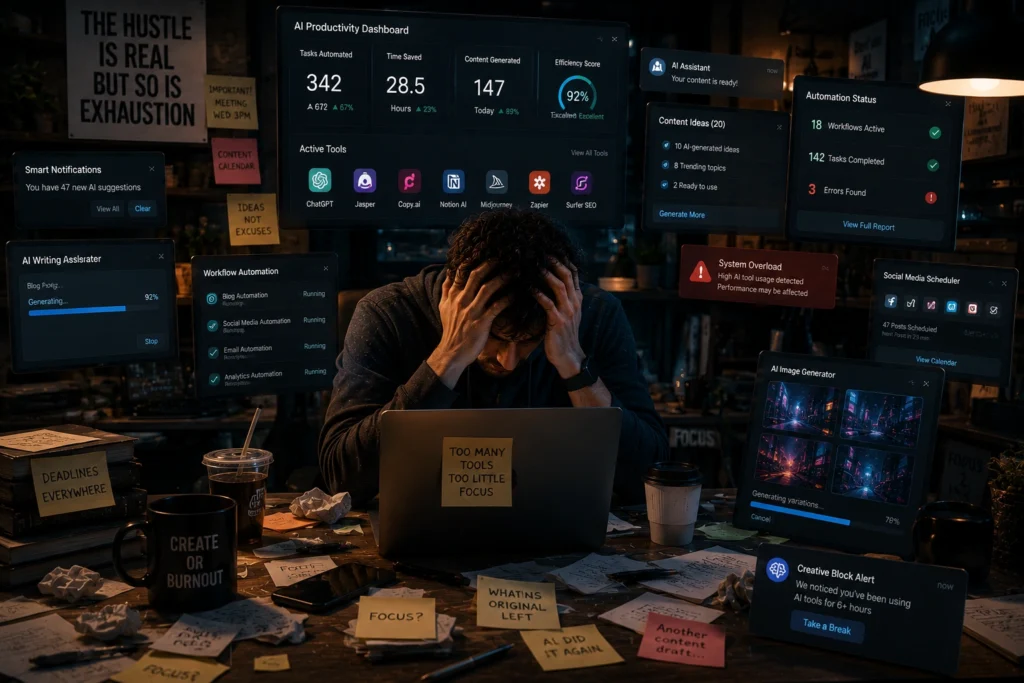
A Real Example Many Creators Relate To
Several YouTube creators and writers have started discussing a strange feeling after using AI heavily for months. Their content output increased, but their creative satisfaction dropped.
The work became faster, yet less personal.
One creator explained it perfectly during a podcast discussion. He said:
“I was publishing more content than ever, but I stopped feeling connected to my own ideas.”
That sentence explains the emotional side of AI productivity better than most technical discussions.
How AI Affects Creativity Over Time?
Creativity Needs Friction
One of the biggest misunderstandings about creativity is the belief that faster always means better.
In reality, creative thinking often comes from struggle, experimentation, boredom, mistakes, and reflection. Many original ideas appear during slow thinking rather than instant output.
AI removes much of that friction.
At first, that feels efficient. Later, it can weaken creative depth.
For example:
- Writers may stop developing their own voice
- Designers may repeat similar styles
- Students may avoid original analysis
- Influencers may create trend based content constantly
The internet already shows signs of this shift. Many posts, videos, and blogs now sound strangely similar.
People notice it even if they cannot explain why.
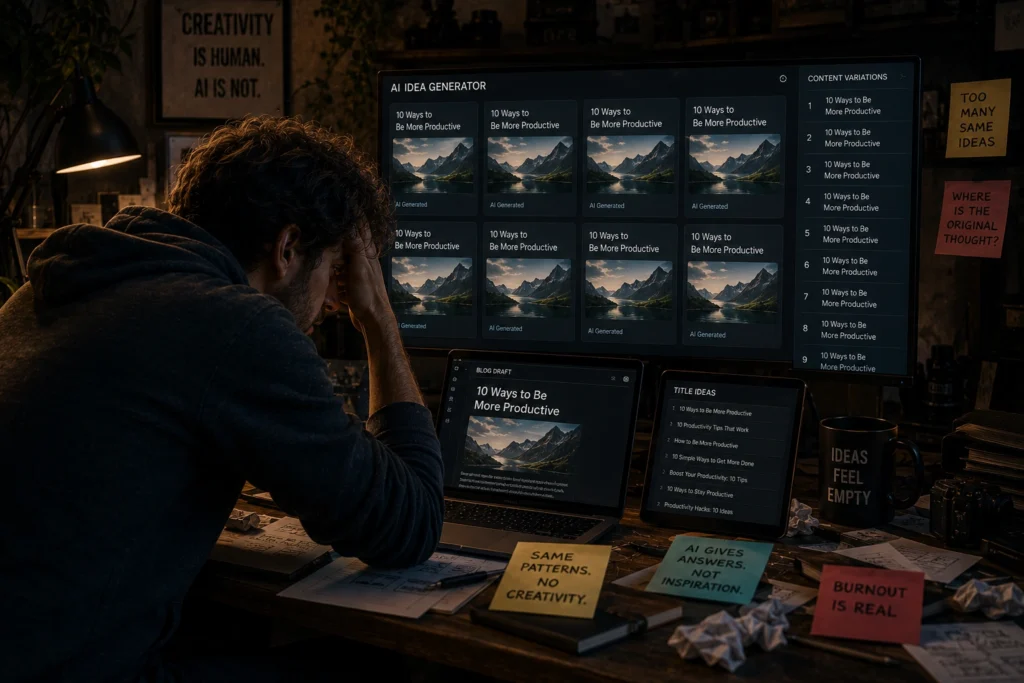
AI Suggestions Can Quietly Shape Human Thinking
Most AI systems generate responses based on patterns from existing content. This means users are often exposed to familiar structures repeatedly.
Over time, creators may unknowingly start thinking inside those patterns.
Instead of exploring unusual ideas, people begin selecting the safest and fastest options suggested by algorithms.
That can reduce originality across entire industries.
This is one reason why some artists and writers intentionally spend time offline now. They want space to think without constant algorithmic influence.
AI Workflow Tools and Digital Burnout
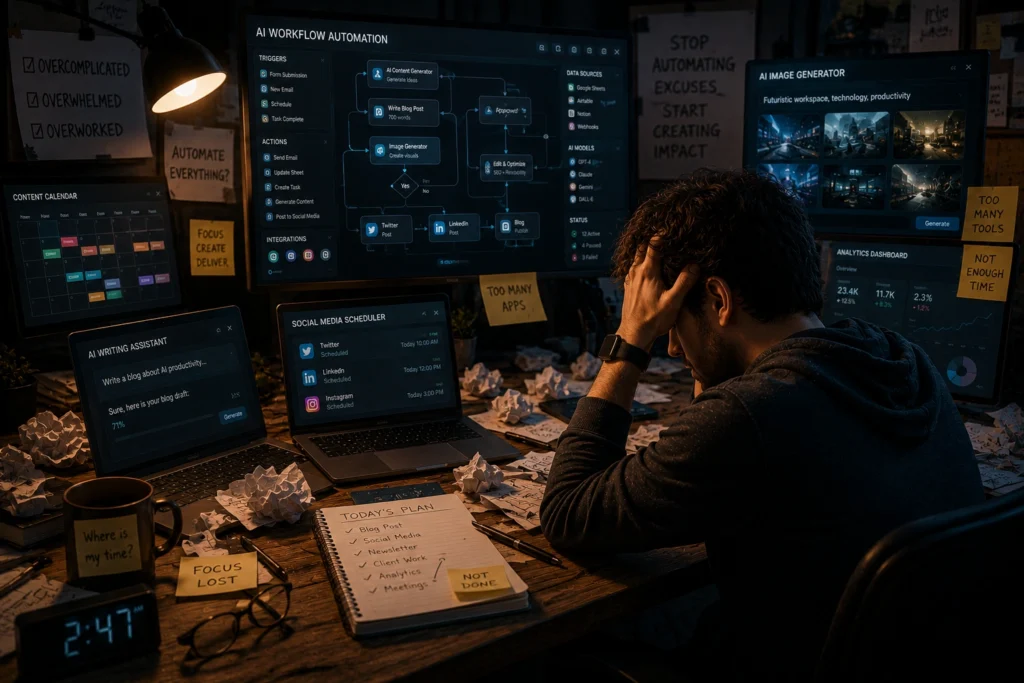
AI workflow tools are designed to improve efficiency. Ironically, they sometimes create a different kind of exhaustion.
Productivity Starts Feeling Endless
When tasks become easier to complete, expectations usually increase.
A freelancer who once managed three projects manually may suddenly take on eight because AI helps speed up the workflow. A creator who posted twice weekly may start uploading daily.
Eventually, the pressure returns.
The difference is that the workload now grows faster than mental recovery.
This creates a cycle many people recognize:
- Faster work
- More output
- Higher expectations
- Increased burnout
The technology saves time, but people fill that saved time with even more work.
The Illusion of Being Productive
Another hidden problem is performative productivity.
Many users spend hours testing AI tools, organizing dashboards, optimizing systems, and experimenting with automation setups without completing meaningful work.
They feel productive because they are busy.
But busy and productive are not always the same thing.
This happens often with complex AI workflow tools where optimization becomes a distraction itself.
When AI Tools That Save Time Start Wasting Time
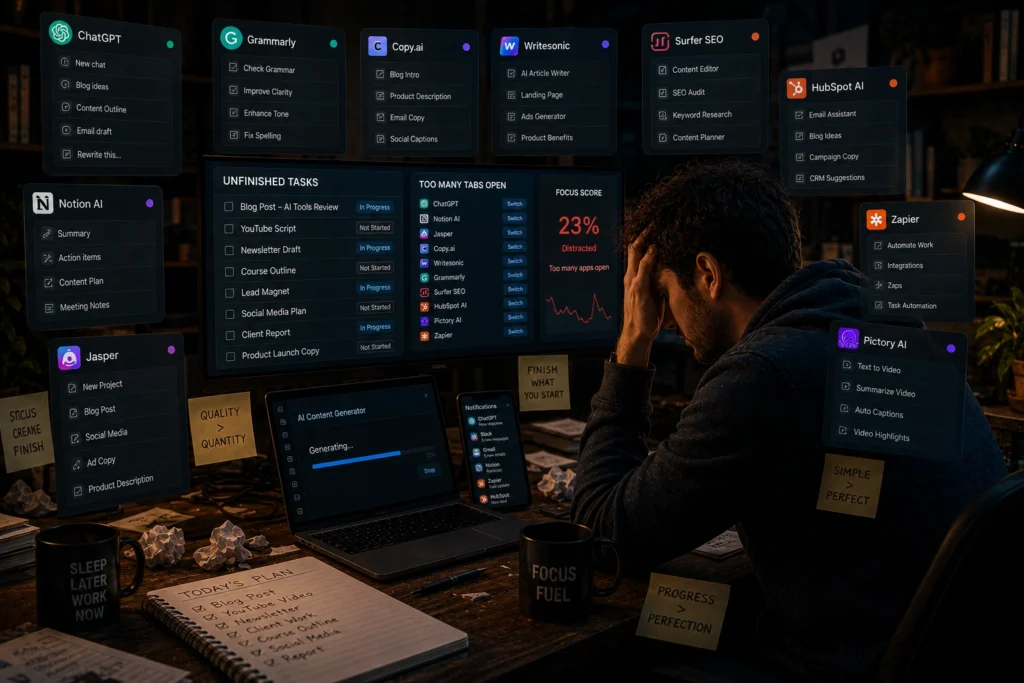
Not every tool that promises efficiency actually improves productivity.
Some users constantly switch between apps searching for the perfect workflow. Others spend more time editing AI outputs than creating manually.
This is especially common among beginner creators.
For example:
- A student may generate five AI summaries instead of studying properly
- A creator may rewrite AI captions repeatedly
- A freelancer may spend hours testing automation systems
Eventually, the process becomes mentally draining.
Sometimes simple systems work better than highly automated ones.
The Rise of Passive Thinking
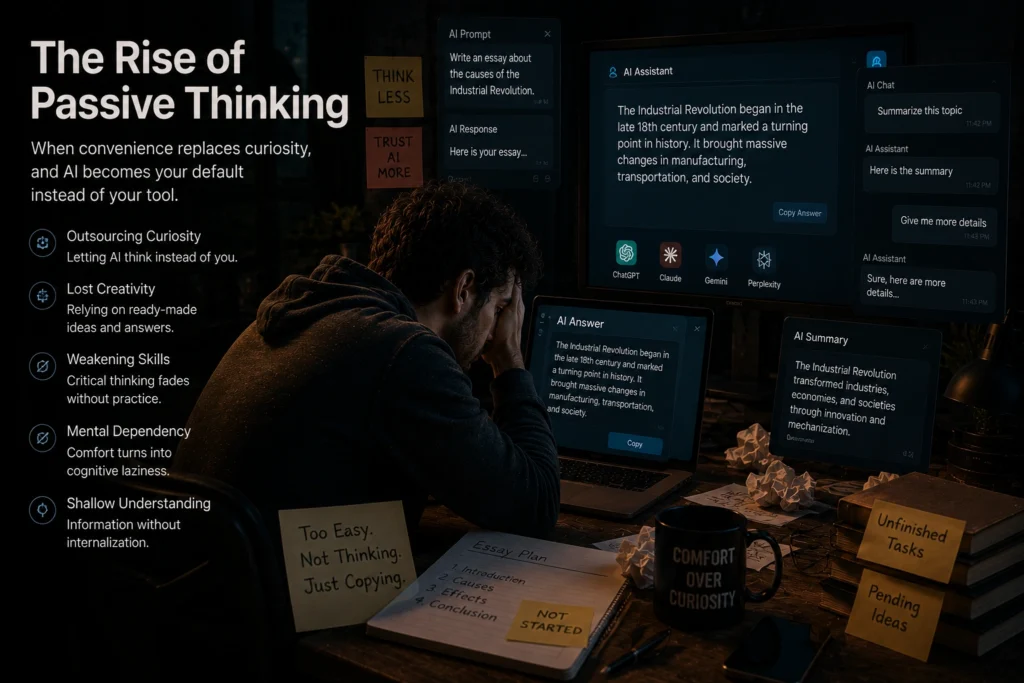
One concern educators increasingly discuss is passive thinking.
When AI provides instant answers constantly, people may stop asking deeper questions themselves.
Critical thinking weakens when every challenge immediately receives a generated solution.
This affects:
- Problem solving ability
- Research habits
- Attention span
- Decision making confidence
Students especially need to understand this balance.
Using AI for support is helpful. Letting AI think entirely for you is different.
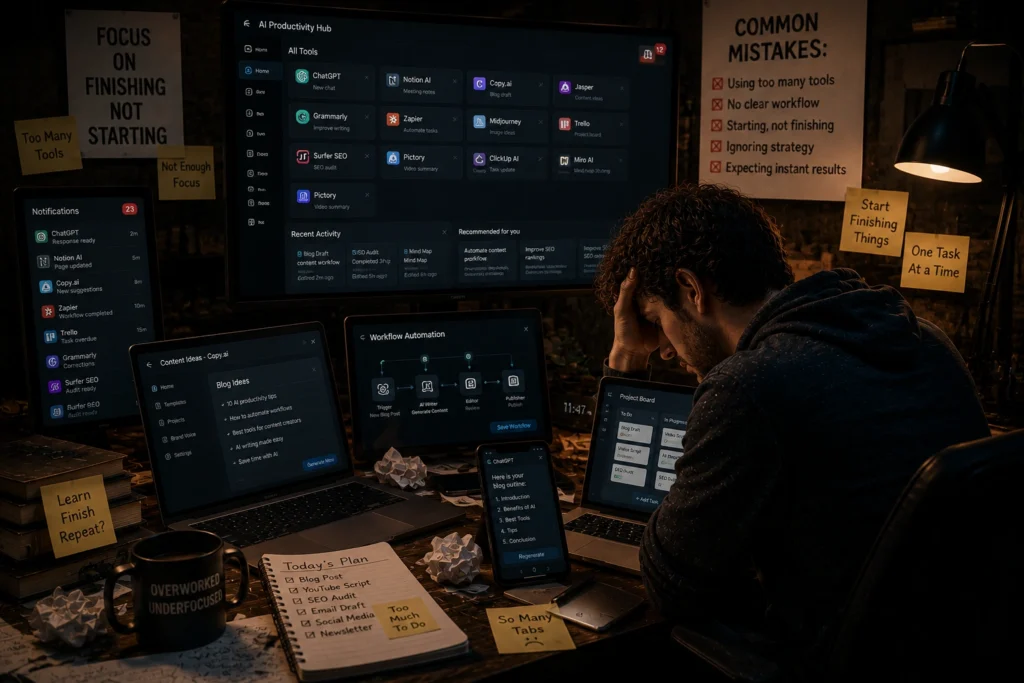
Common Mistakes People Make With AI Productivity Tools
Depending On AI For Every Small Task
Not every task needs automation.
Constant dependence reduces mental flexibility over time.
Replacing Creative Process Completely
AI should support creativity, not replace personal perspective.
Audiences still connect most deeply with authentic human experiences.
Ignoring Mental Fatigue
Many people assume faster workflows reduce stress automatically.
In reality, excessive digital stimulation often increases cognitive overload.
How To Use AI Without Losing Creativity?
Use AI For Structure, Not Identity
AI works best when handling repetitive tasks like organization, scheduling, transcription, or outlining.
Your ideas, experiences, opinions, and storytelling should still come from you.
Protect Deep Thinking Time
Some of the best creators intentionally spend time away from algorithms and automation.
Reading books, walking, brainstorming manually, and thinking slowly still matter.
Build Smaller Systems
Most people do not need twenty productivity apps.
A simple workflow usually creates less stress and better long term consistency.
Stay Aware Of Your Own Thinking
One useful habit is asking:
“Would I still have this idea without AI suggesting it first?”
That question alone can improve self awareness dramatically.
Frequently Asked Questions
What is AI productivity?
AI productivity refers to using artificial intelligence tools to complete tasks faster, improve organization, automate workflows, and increase efficiency.
Can AI productivity tools reduce creativity?
Yes. Over reliance on AI tools can reduce creative thinking if users stop brainstorming, experimenting, and developing ideas independently.
Are AI workflow tools worth using?
AI workflow tools can be useful when they simplify repetitive tasks. However, using too many systems can create unnecessary complexity and mental overload.
How AI affects creativity in creators and students?
AI can influence creativity by encouraging faster content production and pattern based thinking. This may reduce originality if users rely entirely on generated suggestions.
Do AI tools that save time increase burnout?
Sometimes they do. Faster workflows often lead people to take on more work, which can increase stress and digital fatigue over time.
Conclusion
AI productivity tools are not inherently harmful. In many cases, they genuinely help people stay organized, save time, and reduce repetitive work.
The real issue appears when convenience quietly replaces independent thinking.
Creativity still needs reflection. Focus still needs silence. Human ideas still need space to develop naturally without constant automation shaping every step.
The people who benefit most from AI in 2026 will probably not be the ones who automate everything. They will be the ones who know when to step away from automation completely.
That balance matters more than most people realize.
If you enjoy exploring the real impact of AI on creativity, productivity, content creation, and digital life, you can read more practical AI insights and guides on AI With Sahil